
Description
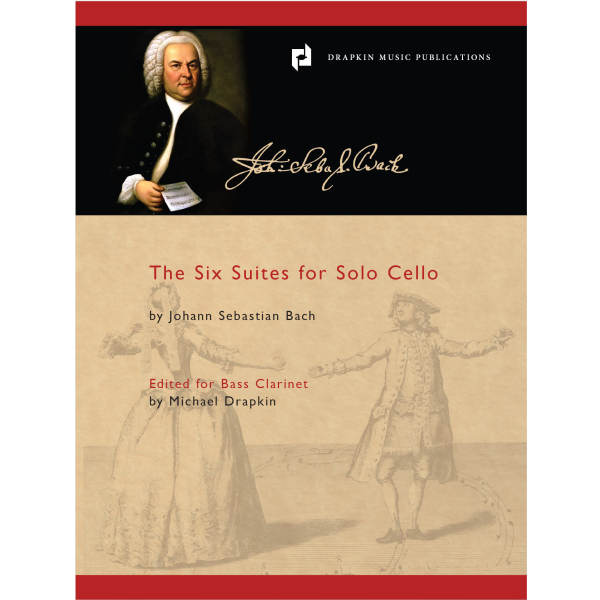
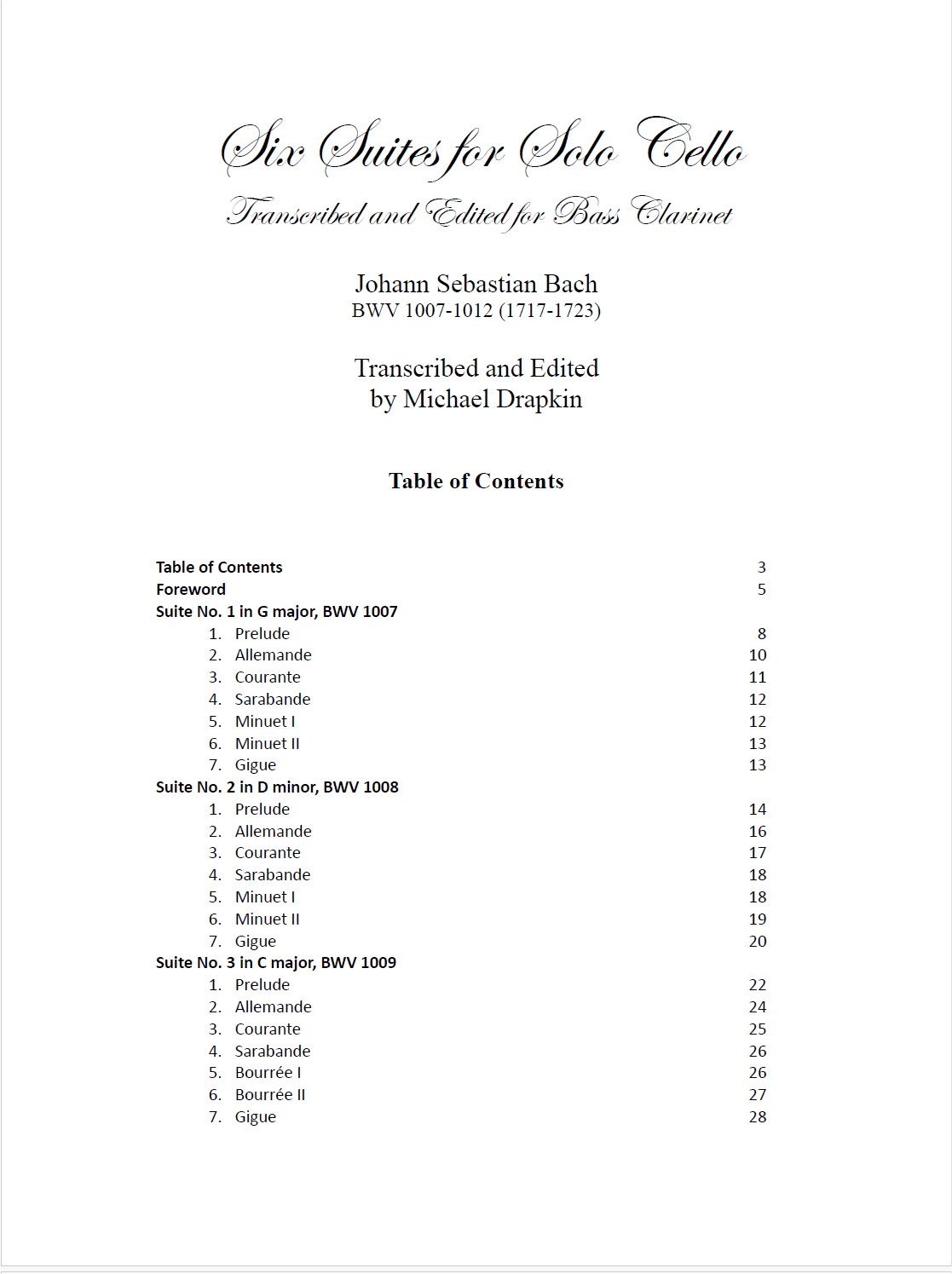
I offer this volume for two purposes: to help bass clarinetists become fluent in bass clef, and to expand our solo repertoire with some of the greatest music ever written.
My freshman year at the Eastman School of Music came right after a summer at Aspen studying with the late Gary Gray, where I played bass clarinet on Strauss’s Ein Heldenleben—and spent the first rehearsal completely lost! Soon after, I auditioned for extra bass clarinet with the Rochester Philharmonic, based at Eastman Theatre. I received plenty of discouragement (“a freshman won’t win that job”), yet I finished runner-up. I have always suspected the deciding moment was a sight-reading excerpt from the slow movement of Prokofiev’s Fifth Symphony, written in bass clef. I had not yet learned to read bass clef.
When I mentioned this to my dear friend John Yeh (then at Juilliard), he said, “Learn the Bach cello suites on bass clarinet. That’s how everyone learns bass clef.” So I did. Two summers later, I played Prokofiev’s Fifth Symphony at Aspen—this time reading bass clef fluently.
That lesson stayed with me: the Bach suites aren’t only great music—they’re a practical, lifelong training ground. This edition grew out of that conviction, with the goal of making these masterpieces playable, idiomatic, and useful for bass clarinetists.
These suites were conceived for cello, not bass clarinet, and they are often written in ways that do not naturally “lie” on our instrument. My approach in this edition is guided by two goals:
- Bass clef fluency. The music is retained in bass clef. If you intend to play bass clarinet in orchestras, reading bass clef is not optional—it is a requirement of the job.
- Performability on bass clarinet. I have worked to make these suites playable as solo repertoire on our instrument—still challenging in places, but idiomatic and musically convincing. The original range is largely compatible with bass clarinet, and the famously high writing of the Sixth Suite, difficult for many cellists, is often less of a problem for us. This edition assumes the use of a modern low-C instrument. As a byproduct of learning these suites, you will become very facile with the low notes on the bass clarinet.
I have approached these suites as a reimagining for bass clarinet: faithful to Bach’s line and structure, unapologetically practical about what the instrument can and cannot do. Where cello technique does not translate directly—especially double stops and bow-driven phrasing—I offer solutions that preserve harmonic intent while producing a result that sounds like music.
What follows are the main issues I had to solve, and how I chose to solve them.
Double stops and implied harmony
The cello can be polyphonic through double stops; bass clarinet cannot reproduce that harmonic reality in the same literal way. While multiphonics exist, they are not the same musical language Bach is using. The task here is to imply the harmony that Bach states overtly. In doing so, I am careful to preserve what matters most: the continuity of the line and the harmonic function; when notes are omitted, it is because the harmony is already clear—or can be stated more convincingly in a way the instrument can actually sustain.
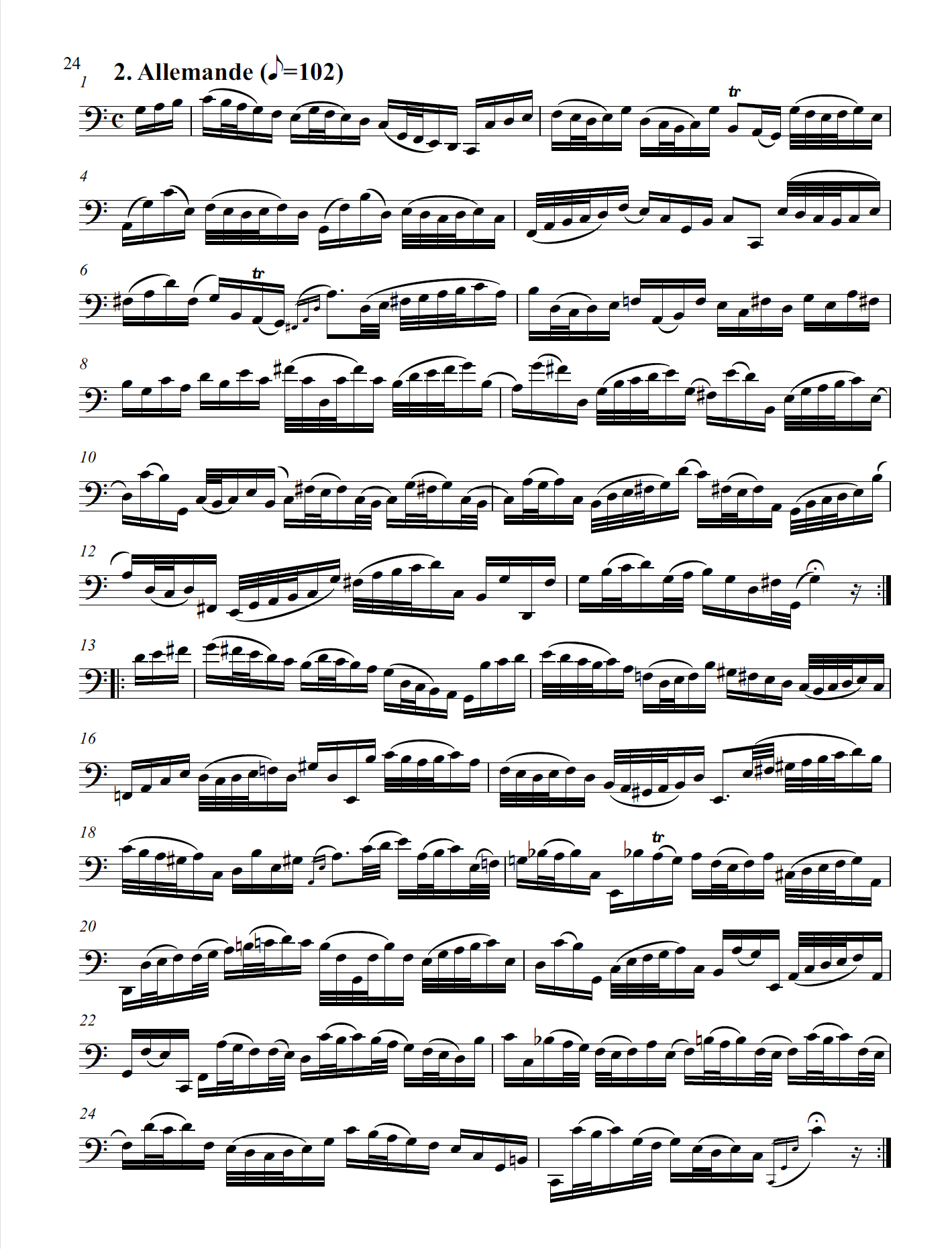
Sometimes I omit a double-stop pitch when the harmony is already clear from the line. In other places I indicate acciaccaturas (before the beat) to suggest the harmonic pillars without forcing awkward literalism. These do not need to be “fast” or metronomic; as a soloist you have freedom here.
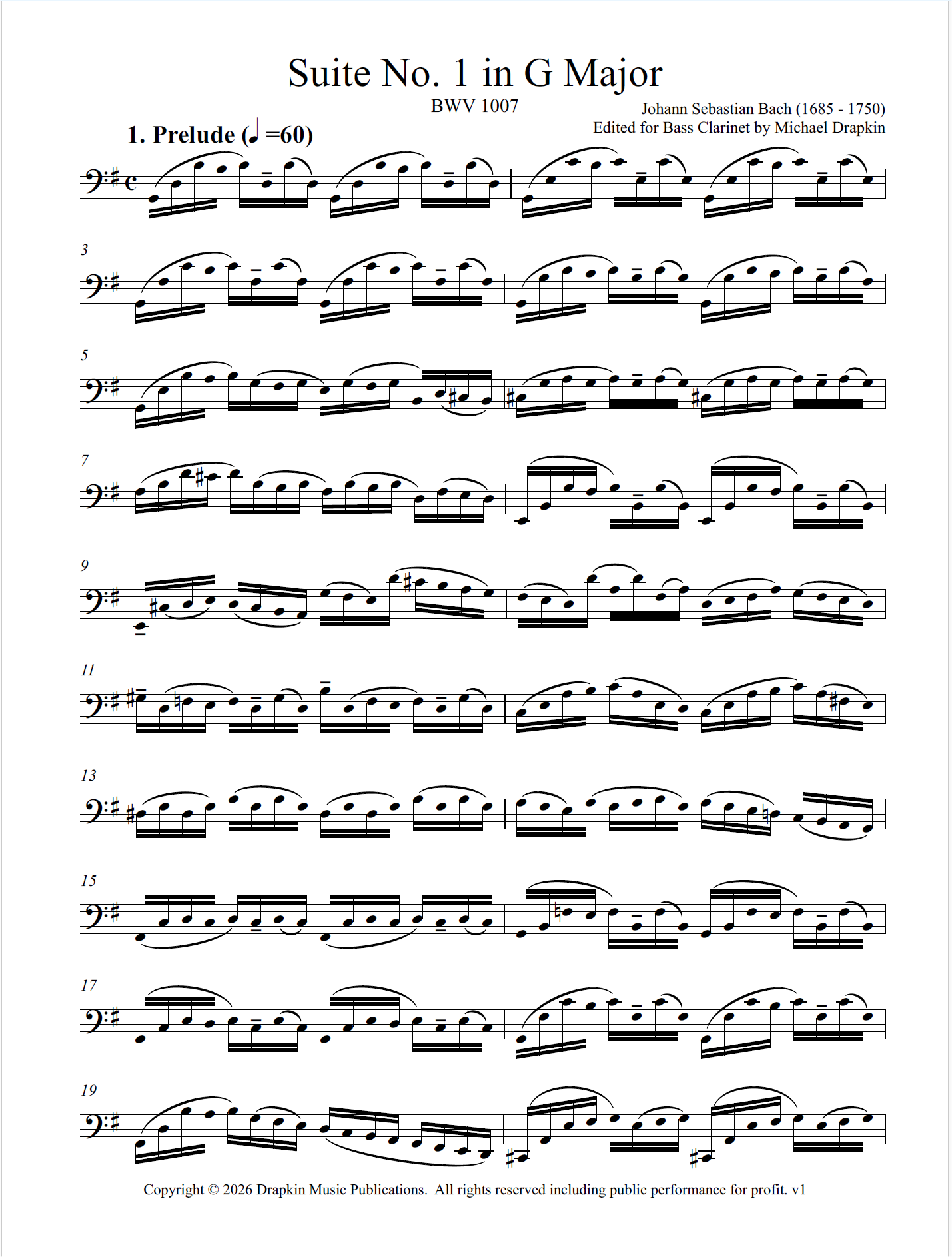
Example: at the beginning of the Allemande in G major, the two grace notes (G and D) can be played broadly and expressively—almost as an unmeasured introduction—before continuing with the sixteenth-note A. Elsewhere I rework double stops into real rhythm when that better serves the musical point; for instance, in the final bar of the G major Prelude, I recast the closing sonority as root–third–octave rather than grace notes, emphasizing the finality of the cadence.
Bowing, slurs, and wind phrasing
These suites are conceived for bowing, and cello slurs do not always translate to wind articulation. Many slurs have been rewritten to suit bass clarinet line and resonance. If you compare the original to my edition, you will notice a bias toward slurred connection rather than tongued separation, because I believe it is more natural—and more musical—on our instrument.
Pitch level and transposition
The keys and notes are left as written (not transposed), so the suites will sound a whole step lower than on cello. In solo performance this is of little consequence unless a listener is a purist or has perfect pitch. I chose not to compensate for the instrument’s transposition, because this is solo repertoire; what matters most is fluent reading, resonance, and musical sense—not matching a cello’s sounding pitch.
Breathing and the absence of breath marks
You will notice the conspicuous absence of breath marks. This is deliberate. Where to breathe is highly personal, and lung capacity varies greatly. Look for opportunities—cellists do not share this requirement—and when there are no “perfect” places, take one anyway, as long as it is done musically.
This challenge begins immediately. In the G major Prelude, look from bar 31 to the end: there is essentially nowhere to breathe. Wherever you choose to do so, make the breath part of the phrase.
Dynamics and interpretive markings
For similar reasons, dynamics and many interpretive markings are kept relatively light. These suites can be played in an infinite number of ways; you will want to add your own dynamics, ritards, fermatas (yes, I add a few—particularly at major structural ends), crescendi/diminuendi, and expressive cues that reflect your conception. Treat these markings as a practical starting point. Baroque sources leave much to the performer—articulation, dynamics, timing, and ornamentation are part of the act of interpretation—so I encourage you to
shape these suites with your own musical judgment.
Suite No. 6 in D major and ledger lines
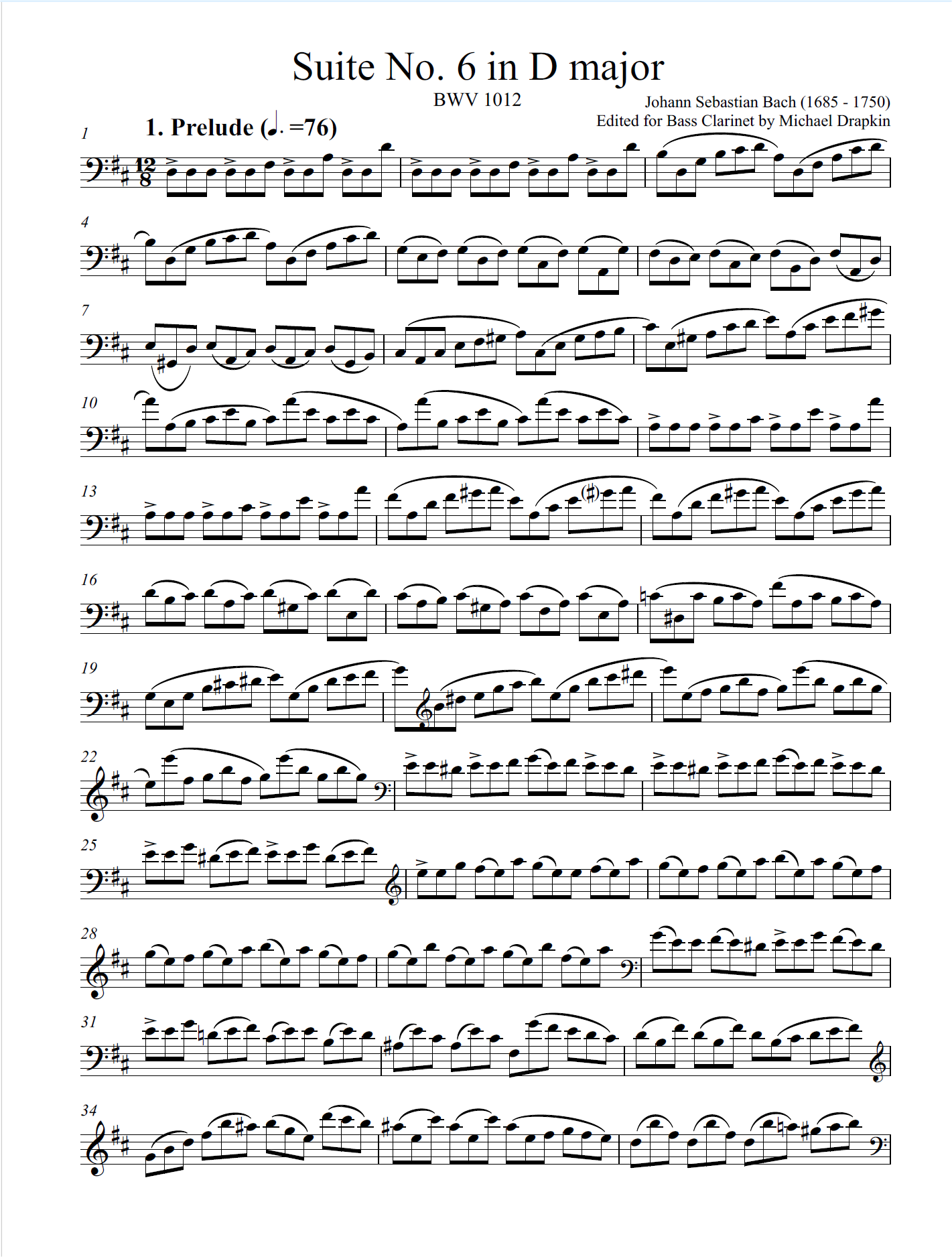
Many scholars believe that Suite No. 6 was composed for a higher-pitched cello. The original suite makes extensive use of tenor clef in the higher range. As bass clarinetists, we don’t read tenor clef, so to address the issue of ledger lines above the bass clef staff, I switch to treble clef when the notes reach the left-hand A in the middle register and above. Ledger lines can make reading difficult, although the low extension notes on the bass clarinet are much easier to read in bass clef, where low C is only two ledger lines below the bass clef,
as opposed to treble clef, with numerous ledger lines. There is no perfect solution, but I believe at least for Suite No. 6 this works best. As in the original, it involves clef changes.
Articulation: music, not études
As stated above, this is great music—not a collection of studies. In places I add tenuto marks where I do not want an overly short staccato, and at times you will see both together (for example, the opening of the Courante in G major). These markings are there to shape line, not to police you.
Compare, disagree, and personalize
Presented here are my interpretations of these suites for bass clarinet. If you disagree with any of them, change them. You are the soloist. One useful way to develop your own solutions is to compare this edition with a cello score (readily available on IMSLP). You may find that you prefer the original slurring, or you may discover why I made the choices I did.
Finally, I strongly urge you to play these suites soloistically: take time where it is musically warranted and play with imagination and expression. For inspiration, listen to recordings by Yo-Yo Ma and Pablo Casals—the latter often credited with championing and popularizing these works. Notice their freedom with time and emphasis, guided by musical meaning. The metronome markings in this book are suggestions, not laws.
I would like to thank the following individuals for their suggestions and review of my draft: John Bruce Yeh, Asher Carlson, and Sasha Potiomkin, and especially Jerry Simas, whose suggestions were invaluable.
When you learn to play these wonderful suites on bass clarinet, you gain more than bass clef fluency—you enter a world described as “among the most profound of all classical music works” (Gary S. Dalkin) and “monophonic music wherein a man has created a dance of God” (Wilfrid Mellers).